

Research Conclusions....
As an elementary special education teacher, I came away from this project thinking about three decisions I make in the classroom:
-How to identify the support a student needs.
-How to design a lesson students can participate in.
-How to help students communicate when learning gets difficult.
The research on MTSS, hands-on STEM instruction, and social-emotional learning gave me a clearer way to think about each of those decisions.

What the Research Showed
- Multi-Tiered System of Supports (MTSS). Screening and progress monitoring help teachers match instruction to a student’s needs and see whether the support is working. In my third-grade reading example, the gap between word-reading accuracy and comprehension showed why it helps to look at several measures before choosing an intervention (Center on Multi-Tiered System of Supports, n.d.-a; Shanahan et al., 2010).
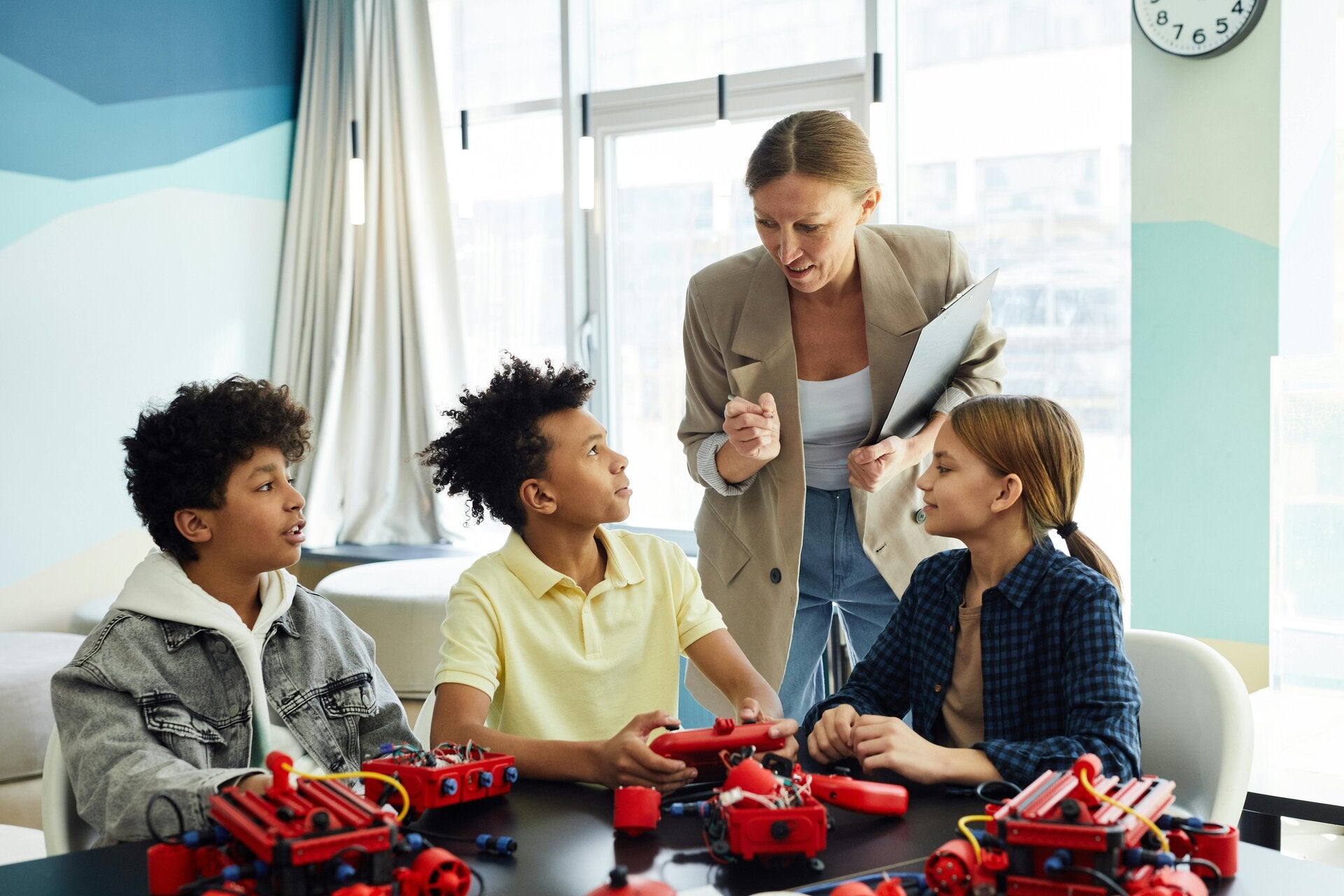
- Hands-On STEM Instruction. Research on a structured project-based science curriculum found that elementary students who received the curriculum scored higher on a science assessment than students who received usual instruction. The cardboard bridge example shows what that approach can look like in practice. Students test a design, use their results to decide what to change, and explain whether the revision helped (Krajcik et al., 2023).
- Social-Emotional Learning (SEL). Research across K–12 found that students who participated in school-based SEL programs showed improvements in areas such as social-emotional skills, behavior, and peer relationships. Results varied with how programs were implemented. In my classroom, that means giving students repeated opportunities to practice skills such as asking for help, taking turns, and resolving disagreements during everyday activities (Cipriano et al., 2023).
Looking Ahead
I see an opportunity for elementary schools to bring these practices together during lessons teachers already teach. During a STEM challenge, for example, I could provide visual directions and multiple ways for students to record their results, explicitly teach how to ask for help or disagree respectfully, and use student responses to decide who needs more practice. That lesson would tell me something about both what students understand and what helps them participate.
Putting these ideas into practice takes planning time, training, and coordination between general and special education teachers. Going forward, I want to pay closer attention to whether students can use a skill in different settings and with fewer prompts. That will help me decide when to keep a support in place, when to adjust it, and when a student is ready for more independence.
Create Your Own Website With Webador